Category Archives: Roswell

THE DOMAIN MISSION

“Airl told me her reasons for coming to Earth and for being in the area of the 509th Bomber Squadron. [i] (Footnote) She was sent by her superior officers to investigate the explosions of nuclear weapons which have been tested in New Mexico. [ii] (Footnote) Her superiors ordered her to gather information from the atmosphere that could be used to determine the extent of radiation [iii] (Footnote) and potential harm this might cause to the environment. During her mission, the space craft was struck by a lighting [iv] (Footnote), which caused her to lose control and crash.

The space craft is operated by IS-BEs who use “doll bodies” in much the same way that an actor wears a mask and costume.  It is a like a mechanical tool through which to operate in the physical world.  She, as well as all of the other IS-BEs of the officer class and their superiors, inhabit these “doll bodies” when they are on duty in space.  When they are not on duty, they “leave” the body and operate, think, communicate, travel, and exist without the use of a body.

The bodies are constructed of synthetic materials, including a very sensitive electrical nervous system, to which each IS-BE adjusts themselves or “tune in” to an electronic wavelength [v] (Footnote) that is matched uniquely to the wavelength or frequency emitted by each IS-BE.  Each IS-BE is capable of creating a unique wave frequency which identifies them, much like a radio signal frequency. This serves, in part, as identification like a finger print.  The doll body acts like a radio receiver for the IS-BE.  No two frequencies or doll bodies are exactly the same.

The bodies of each IS-BE crew member are likewise tuned into and connected to the “nervous system” built into the space craft.  The space craft is built in much the same way as the doll body.  It is adjusted specifically to the frequency of each IS-BE crew member.  Therefore, the craft can be operated by the “thoughts” or energy emitted by the IS-BE.  It is really a very simple, direct control system.  So, there are no complicated controls or navigation equipment on board the space craft.  They operate as an extension of the IS-BE.

When the lightning bolt struck the space craft this caused a short circuit and consequently “disconnected” them from the control of the ship momentarily which resulted in the crash.

Airl was, and still is, an officer, pilot and engineer in an expeditionary force which is part of a space opera [vi] (Footnote) civilization which refers to itself as “The Domain”.  This civilization controls a vast number of galaxies, stars, planets, moons and asteroids throughout an area of space that is approximately one-fourth of the entire physical universe!  The continuing mission of her organization is to “Secure, control and expand the territory and resources of The Domain”.

— Excerpt from the Top Secret military transcripts published in the book ALIEN INTERVIEW, Edited by Lawrence R. Spencer

__________________________________________________

FOOTNOTES:

[i] “…509th Bomber Squadron…”

“The 509th Composite Group was an air combat unit of the United States Army Air Forces during the Second World War and as the 509th Operations Group, is a current unit of the United States Air Force. It was tasked with developing and employing a combat delivery system for the Atomic bomb and conducted the attacks on Hiroshima and Nagasaki, Japan, in August 1945.

The group later became a medium bombardment group of the Strategic Air Command, as the combat component of the 509th Bomb Wing, before being inactivated in 1952. Its lineage, honors, and history were also bestowed on the like-numbered wing in 1947.

The 509th Composite Group was constituted on December 9, 1944, and activated on December 17, 1944, at Wendover Army Air Field, Utah, commanded by Colonel Paul W. Tibbets. Colonel Tibbets had been assigned to organize and command a combat group to develop the means of delivering an atomic weapon by airplane against targets in Germany and Japan. Because the flying squadrons of the group consisted of both bomber and transport aircraft, the group was designated as a “composite” rather than a “bombardment” unit.

The mission profile for both atomic missions called for weather scouts to precede the strike force by an hour, reporting weather conditions in code over each proposed target. The strike force consisted of a bombing aircraft, with the aircraft commander responsible for all decisions in reaching the target and the bomb commander (weaponeer) responsible for all decisions regarding dropping of the bomb; a blast instrumentation aircraft which would fly the wing of the strike aircraft and drop instruments by parachute into the target area; and a camera ship, which would also carry scientific observers. Each mission would have one “spare” aircraft accompanying it as far as Iwo Jima to take over carrying the bomb if the strike aircraft encountered mechanical problems.

The Hiroshima mission was flown as planned and executed without significant problems or diversion from plan. The Nagasaki mission, however, originally targeted Kokura and encountered numerous problems which resulted in the bombing of the secondary target, a delay in bombing of almost two hours, detonation of the bomb some distance from the designated aiming point, and a diversion of the strike force to emergency landings on Okinawa because of a lack of fuel. However the basic objectives of the mission were met despite the problems.

Lieutenant Jacob Beser flew on both attack aircraft (the only man to do so), although Maj. Charles W. Sweeney and crew observed Hiroshima from The Great Artiste and dropped the bomb on Nagasaki from Bockscar. Lawrence H. Johnston of Project Alberta observed all three nuclear explosions, including the Trinity test.

While the Nagasaki mission was in progress, two B-29’s of the 509th took off from Tinian to return to Wendover. Lt.Col. Classen, the deputy group commander, in the unnamed victor 94 and crew B-6 in Jabit III, together with their ground crews, were sent back to stage for the possibility of transporting further bomb assemblies to Tinian. However the plutonium cores were still at Site Y, and on August 13 Gen. Groves ordered that all shipments of material be stopped. His order reached Los Alamos in time to keep the third bomb from being shipped. The first Atomic War lasted 9 days, August 6 through August 15, 1945.

After the Nagasaki mission the group continued combat operations, making another series of pumpkin bomb attacks (12 dropped) on August 14. With the announcement of the Japanese surrender, however, the 509th CG flew three further training missions involving 31 sorties on August 18, 20, and 22, then stood down from operations.”

See Article at Wikipedia.org: Atomic bombings of Hiroshima and Nagasaki

— Reference:  Wikipedia.org

[ii] “… nuclear weapons which have been tested in New Mexico.”

“The first nuclear weapons test was conducted in Alamogordo, New Mexico, on July 16, 1945, during the Manhattan Project, and given the codename “Trinity”. The test was originally to confirm that the implosion-type nuclear weapon design was feasible, and to give an idea of what the actual size and effects of a nuclear explosion would be before they were used in combat against Japan. While the test gave a good approximation of many of the explosion’s effects, it did not give an appreciable understanding of nuclear fallout, which was not well understood by the project scientists until well after the atomic bombings of Hiroshima and Nagasaki.”


— Reference:  Wikipedia.org

[iii] “…radiation…”

The dangers of radioactivity and of radiation were not immediately recognized. Acute effects of radiation were first observed in the use of X-rays when the Serbo-Croatian-American electric engineer Nikola Tesla intentionally subjected his fingers to X-rays in 1896. He published his observations concerning the burns that developed, though he attributed them to ozone rather than to X-rays. His injuries healed later.

The genetic effects of radiation, including the effects on cancer risk, were recognized much later. In 1927 Hermann Joseph Muller published research showing genetic effects, and in 1946 was awarded the Nobel prize for his findings.

Before the biological effects of radiation were known, many physicians and corporations had begun marketing radioactive substances as patent medicine and radioactive quackery. Examples were radium enema treatments, and radium-containing waters to be drunk as tonics. Marie Curie spoke out against this sort of treatment, warning that the effects of radiation on the human body were not well understood (Curie later died from aplastic anemia assumed due to her work with radium, but later examination of her bones showed that she had been a careful laboratory worker and had a low burden of radium. A more likely cause was her exposure to unshielded X-ray tubes while a volunteer medical worker in WWI). By the 1930s, after a number of cases of bone necrosis and death in enthusiasts, radium-containing medical products had nearly vanished from the market.”

— Reference:  Wikipedia.org

[iv] …”the space craft was struck by a bolt of lighting”…

“Lightning is an atmospheric discharge of electricity, which typically occurs during thunderstorms, and sometimes during volcanic eruptions or dust storms. The leader of a bolt of lightning can travel at speeds of 60,000 m/s, and can reach temperatures approaching 30,000 °C (54,000 °F), hot enough to fuse soil or sand into glass channels. There are over 16 million lightning storms every year.”

— Reference:  Wikipedia.org

[v] …”electronic wavelength”…

“In physics, wavelength is the distance between repeating units of a propagating wave of a given frequency. It is commonly designated by the Greek letter lambda (λ). Examples of wave-like phenomena are light, water waves, and sound waves. In a wave, a property varies with the position. For example, this property can be the air pressure for a sound wave, or the magnitude of the electric or the magnetic field for light. The wavelengths of frequencies audible to the human ear (20 Hz–20 kHz) are between approximately 17 m and 17 mm, respectively. Visible light ranges from deep red, roughly 700 nm to violet, roughly 400 nm (430–750 THz). For other examples, see electromagnetic spectrum.”


— Reference:  Wikipedia.org

[vi] …”space opera” civilization”…

“It was not until the 1920s that the space opera proper appeared in the pulp magazines Weird Tales and Amazing Stories. Unlike earlier stories of space adventure, which either related the invasion of Earth by extraterrestrials, or concentrated on the invention of a space vehicle by a genius inventor,

pure space opera simply took space travel for granted (usually by setting the story in the far future), skipped the preliminaries, and launched straight into tales of derring-do among the stars.

The first stories of this type were J. Schlossel’s The Second Swarm (Spring 1928) in Amazing Stories Quarterly and Edmond Hamilton’s Crashing Suns (August-September 1928) and The Star Stealers (February 1929) in Weird Tales . Similar stories by other writers followed through 1929 and 1930; by 1931 the space opera was well-established as a dominant sub-genre of science fiction.

The transition from the older space-voyage story to the space opera can be seen in the works of E. E. “Doc” Smith. His first published work, The Skylark of Space (August-October 1928, Amazing Stories), merges the traditional tale of a scientist inventing a space-drive with planetary romance in the style of Edgar Rice Burroughs; but by the time of the sequel, Skylark Three (August-October 1930, Amazing Stories) which introduces the space faring race of the Fenachrone, Smith had moved closer to a space opera mode.

Space opera in its most familiar form was a product of 1930s-40s pulp magazines. Like early science fiction in general, space opera borrowed much of its style from established adventure, crime, and thriller genres. Notable influences included stories that described adventures on exotic or uncivilized frontiers, e.g. the American West, Africa, or the Orient. The imagined future of space opera included immense space liners, intrepid explorers of unknown worlds, pirates of the space ways, and tough but incorruptible space police.

E. E. “Doc” Smith’s later Lensman Series and the works of Edmond Hamilton, John W. Campbell, and Jack Williamson in the 1930s and 1940s were popular with readers and much imitated by other writers. By the early 1940s, the repetitiousness and extravagance of some of these stories led to objections from some fans.”

— Reference:  Wikipedia.org

Originally posted 2012-01-16 15:12:25. Republished by Blog Post Promoter

Share

OFFICIALS WHO KNEW ABOUT ROSWELL

“Shortly after I finished recounting the previous interview with Airl to the stenographer, I was summoned urgently to the office of the Commanding Officer of the base.  I was escorted by four heavily armed military policemen.  When I arrived, I was asked to be seated in a very large, make-shift office that had been arranged with a conference table and chairs.  In the office were several dignitaries I had seen at various times in “the gallery”.   I recognized a few of them because they were famous men.

I was introduced to these men, which included:

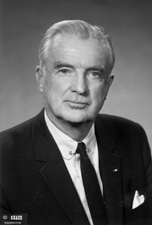
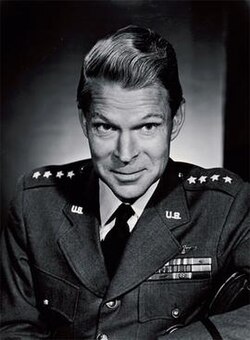
Army Air Force Secretary Symington, [i] (Footnote) General Nathan Twining,

[ii] (Footnote) General Jimmy Doolittle , [iii] (Footnote) General Vandenberg, [iv] (Footnote) and General Norstad. [v] (Footnote)

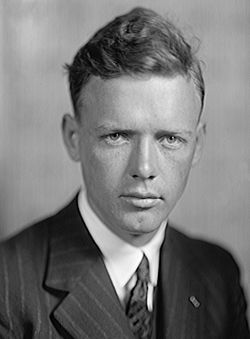
Much to my surprise Charles Lindbergh [vi] (Footnote) was also in the office.  Secretary Symington explained to me that Mr. Lindberg was there as a consultant to the chief of staff of the U.S. Air Force.  There were several other men present in the room who were not introduced.  I assume these men were personal aides to the officers or agents of some intelligence service.

All of this sudden attention, not only from the Secretary and generals, but from such world famous people as Mr. Lindbergh, and General Doolittle, made me realize how critically important my role as an “interpreter” for Airl was, as seen through the eyes of others.  Until this time I was not really aware of this except in an peripheral sense. I suppose this was because I was so absorbed in details of the extraordinary situation.  Suddenly, I began to grasp the magnitude of my role.  I think that the presence of these men in that meeting was intended, in part, to impress me with this fact!

The Secretary instructed me not to be nervous.  He said that I was not in any trouble.  He asked me if I thought the alien would be willing to answer a list of questions they had prepared.  He explained that they were very eager to discover many more details about Airl, the flying disc, The Domain, and many other subjects that Airl had disclosed in the interview transcripts.  Of course, they were mainly interested in questions relating to the military security and the construction of the flying disc.

–  Excerpted from the Personal Notes of Matilda MacElroy, published in the book ALIEN INTERVIEW, edited by Lawrence R. Spencer
_________________________________________
FOOTNOTES:


[i] “…General Symington,”…

His first positions were chairman of the Surplus Property Board (1945), administrator of the Property Administration (1945–1946) and AssistantSecretary of War for Air (1946–1947). On September 18, 1947, the Office of the Secretary of the Air Force was created and Symington became the first Secretary.  Symington once formally requested a report from military sources regarding the possible existence of subterranean super humans.

– Reference:  Wikipedia.org


[ii] “…General Nathan Twining, …”

He was named commander of the Air Materiel Command, and in 1947 he took over Alaskan Air Command.  In 1947, Twining was asked to study UFO reports; he recommended that a formal study of the phenomenon take placeProject Sign was the result. When Hoyt Vandenberg retired in mid-1953, Twining was selected as chief; during his tenure, massive retaliation based on airpower became the national strategy.  In 1957, President Eisenhower appointed Twining chairman of the Joint Chiefs.

– Reference:  Wikipedia.org


Lt. General James Doolittle, head and shoulders.jpg[iii] “… General Jimmy Doolittle, …”

“Soon after the attack on Pearl Harbor and the US entry into World War II, Doolittle was promoted to Lieutenant Colonel on January 2, 1942, and went to Headquarters Army Air Force to plan the first aerial raid on the Japanese homeland. He volunteered and received Gen. H.H. Arnold’s approval to lead the attack of 16 B-25 medium bombers from the aircraft carrier USS Hornet, with targets in Tokyo, Kobe, Osaka, and Nagoya. It was the first and only combat mission of his military career.

Doolittle received the Medal of Honor, presented by President Franklin D. Roosevelt at the White House, for planning and leading the successful operation. The Doolittle Raid is viewed by historians as a major public-relations victory for the United States. Although the amount of damage done to Japanese war industry was minor, the raid showed the Japanese their homeland was not invulnerable.

Doolittle was portrayed by Spencer Tracy in the 1944 film Thirty Seconds Over Tokyo and by Alec Baldwin in the 2001 film Pearl Harbor, in which the Doolittle raid was depicted. On May 10, 1946, Doolittle reverted to inactive reserve status and returned to Shell Oil as a vice president, and later as a director.  He was the highest-ranking reserve officer to serve in the U.S. military in World War II.”

EDITOR —

In March 1951, he was appointed a special assistant to the Air Force chief of staff, serving as a civilian in scientific matters which led to Air Force ballistic missile and space programs. (?!)

“He retired from Air Force duty on February 28, 1959 but continued to serve his country as Chairman of the Board of Space Technology Laboratories.”

– Reference:  Wikipedia.org

Hoyt Vandenberg[iv] “…General Vandenberg…”

Lieutenant General Vandenberg was designated vice chief of staff of the Air Force on October 1, 1947, and promoted to the rank of General.

– Reference: Wikipedia.org


Lauris Norstad NATO photo.jpg[v] “… General Norstad…”

“On October 1, 1947, following the division of the War Department into the Departments of The Army and The Air Force, General Norstad was appointed deputy chief of staff for operations of the Air Force.”

– Reference: Wikipedia.org


[vi] “… Charles Lindbergh was also in the office…”

“Charles Lindbergh gained sudden great international fame as the first pilot to fly solo across the Atlantic Ocean. He flew from Roosevelt Airfield in Garden City, New York, to Paris (Le Bourget Airport) on 20 May – 21 May 1927 in 33.5 hours. His plane was the single-engine aircraft, The Spirit of St. Louis.

Lindbergh’s accomplishment won him the Orteig Prize; more significant than the prize money was the acclaim that resulted from his daring flight. A ticker-tape parade was held for him down 5th Avenue in New York City on 13 June 1927.

His public stature following this flight was such that he became an important voice on behalf of aviation activities, including the central committee of the National Advisory Committee for Aeronautics in the United States. The massive publicity surrounding him and his flight boosted the aircraft industry and made a skeptical public take air travel seriously. Lindbergh is recognized in aviation for demonstrating and charting polar air-routes, high altitude flying techniques, and increasing aircraft flying range by decreasing fuel consumption. These innovations are the basis of modern intercontinental air travel.

In his six months during WW II in the Pacific in 1944, Lindbergh took part in fighter bomber raids on Japanese positions, flying about 50 combat missions (as a civilian). The U.S. Marine and Army Air Force pilots who served with Lindbergh admired and respected him, praising his courage and defending his patriotism.

After World War II he lived quietly in Connecticut as a consultant both to the chief of staff of the U.S. Air Force and to Pan American World Airways. His 1953 book The Spirit of St. Louis, recounting his non-stop transatlantic flight, won the Pulitzer Prize in 1954.

Dwight D. Eisenhower restored Lindbergh’s assignment with the Army Air Corps and made him a Brigadier General in 1954. In that year, he served on the Congressional advisory panel set up to establish the site of the United States Air Force Academy. In December 1968, he visited the crew of Apollo 8 on the eve of the first manned spaceflight to leave earth orbit.

From the 1960s on, Lindbergh became an advocate for the conservation of the natural world, campaigning to protect endangered species like humpback and blue whales, was instrumental in establishing protections for the “primitive” Filipino group the Tasaday and African tribes, and supporting the establishment of a national park. While studying the native flora and fauna of the Philippines, he also became involved in an effort to protect the Philippine eagle.

In his final years, Lindbergh became troubled that the world was out of balance with its natural environment; he stressed the need to regain that balance, and spoke against the introduction of supersonic airliners.

Lindbergh’s speeches and writings later in life emphasized his love of both technology and nature, and a lifelong belief that “all the achievements of mankind have value only to the extent that they preserve and improve the quality of life.”

In a 1967 Life magazine article, he said, “The human future depends on our ability to combine the knowledge of science with the wisdom of wildness.”

– Reference:  Wikipedia.org

Originally posted 2011-08-03 10:50:09. Republished by Blog Post Promoter

Share

WHO WAS NURSE MATILDA MACELROY?

“As you know in July, 1947, the Roswell Army Air Field (RAAF) issued a press release stating that personnel from the field’s 509th Bomb Group had recovered a crashed “flying disc” from a ranch near Roswell, New Mexico, sparking intense media interest.

Later the same day, the Commanding General of the Eighth Air Force stated that Major Jesse Marcel, who was involved with the original recovery of the debris, had recovered only the tattered remnants of a weather balloon. The true facts of the incident have been suppressed by the United States government since then.You may not know that I was enlisted in the U.S. Women’s Army Air Force (WAC) Medical Corp which was a part of the US Army back then. I was assigned to the 509th Bomb Group as a Flight Nurse at the time of the incident. When the news that there had been a crash was received at the base, I was asked to accompany Mr. Cavitt, the Counter Intelligence Officer, to the crash site as the driver of his vehicle, and to render any needed emergency medical assistance to any survivors, if necessary. Therefore, I briefly witnessed the wreckage of an alien space craft, as well as the remains of the several alien personnel aboard the craft who were already dead.When we arrived I learned that one of the personnel on board the craft had survived the crash, and was conscious, and apparently uninjured. The conscious alien was similar in appearance, but not the same as, the others. Although I was never left entirely alone with the alien, as there were always military personnel, intelligence agency people and a variety of other officials present from time to time, I did have uninterrupted access to and communication with the alien being for nearly six weeks.

Although I served as a nurse in the Army Air Force, I am not a pilot or technician. Further, I did not have any direct contact with the space craft or other materials recovered from the crash site at that time, or thereafter. Hereinafter is an overview and summary of my personal recollections of “conversations” with the alien craft pilot, whom I came to know by the identity of “Airl”. I feel that it is my duty at this time, in the best interest of the citizens of Earth, to reveal what I have learned from my interaction with “Airl” during those six weeks, on the anniversary of her “death” or departure sixty years ago.”

“Also, I am now 83 years old. I have decided to leave this body, which has outlasted its usefulness to me, using a painless method of self-administered euthanasia.”

_____________________________________________

— Excerpted from the letters received from Nurse “Matilda MacElroy”, published in the book ALIEN INTERVIEW, edited by Lawrence R. Spencer.

EDITOR’S NOTE:

To my personal knowledge the actual name and identity of “Nurse MacElroy” ( Nurse X ) has never been documented, as she was, apparently, transferred away from the 509th Bomb Group after the alien pilot died and given a new, secret identity.  However, other researchers have discovered witnesses as to the possible identity of several nurses who are known to have been stationed at the base during July, 1947.  What follows is an excerpt from http://www.roswellproof.com, which contains detailed information about the crash and cover-up of this incident.  The several nurses referred to in the following article are referred to as “NURSE X”.  Could any of these persons be the true identity of “Matilda MacElroy”?

David Wagnon, who was a young medical technician at the base hospital, remembered the young, attractive nurse fitting Dennis’ (and perhaps Pete Anaya’s) description. Oddly Wagon also selected the name “Naomi Self” out of a lineup of possible names. However, when shown the known nurses from the base yearbook, Wagnon selected 1st Lt. Adeline “Eileen” Fanton as the nurse he remembered. (photo right)  Besides her physical description, many aspects of her history match up with what Dennis ascribed to Nurse X.

Two other witnesses also suggest Dennis may have known Fanton well.  Bob Wolf, a minority owner of KGFL radio in Roswell, said it was known that Dennis was seeing a base nurse fitting Fanton’s description.  Sgt. LeRoy Lang said he trained Fanton in firearms use and saw Fanton and Dennis together on the base on a number of occasions.

Another possible candidate for Nurse X was Miriam “Andrea” Bush, 27-year-old secretary of the hospital administrator, Lt. Col. Harold Warne.  In the 2007 book, Witness to Roswell by Tom Carey and Donald Schmitt (Chapt. 12), hers is one of two other witness accounts of aliens at the base hospital besides Dennis’.   A picture of Miriam Bush is also in the book (right).  Like Fanton, she was short and petite with dark hair.  

According to her sister Jean and brother George, Miriam Bush came home one night in a state of total shock.  Finally she said that there were a lot of strange medical personnel at the hospital she didn’t recognize and who ignored the regular medical staff.  Later Warne would take her to an examination room and she saw several small childlike bodies.  One was moving.  Their skin was grayish to brown and they were covered in something like white linens.  Their heads and eyes were large.  The next day she came home and said nobody was ever to say anything further about it.  The family thought she had been very heavily threatened.  They said the event so traumatized her that it ruined her life.  She died under suspicious circumstances in 1989, with bruises covering her arms, but ruled a suicide by suffocating herself with plastic bag tied round her head. Miriam Bush’s sister-in-law, about her death and seeing an alien move.

Yet another good candidate for Nurse X was Mary Crowley Lowe. In 1998, Tom Carey was tipped off to her existence by friends of hers, Mr. and Mrs. Charles Huttanus. In 1960, Mrs. Huttanus had been a civilian employee at the base (now named Walker Air Force Base), where Lowe was also employed. Mrs. Huttanus claimed, much to her shock, that Mary Lowe told her, “Back in 1947, I was a nurse and happened to be at the hospital when the aliens from the UFO crash were brought in.” Huttanus said Lowe would say no more. The Hutanuses refused to identifiy the woman and added that she would deny the story even if she was located.  However, they did inadvertantly leave a significant clue indicating she still lived in Roswell and that her husband was employed as a golf pro there at New Mexico Military Institute.  With a little sleuthing, she was quickly identified as Mary Lowe.

Carey and Schmitt decided to have an associate, UFO historian Wendy Connors, approach Lowe in July 1999, believing a woman might have a better chance at gaining her trust.  Connors was invited in for a two-hour chat, but Mary Lowe denied being at the base in 1947, saying she was an Army nurse stationed in Scotland at the time (similar to Dennis’ story of her being sent to England immediately afterwards).  However, her Army records indicated she was supposedly discharged in 1946 for marrying an enlisted man.  (Military regulations then forbade officers and enlisted people marrying one another.)  There was no explanation for the discrepancy.

When Connors asked Lowe if she had been at the base hospital in July 1947, Connors reported Lowe wanted to know if Glenn Dennis had been her informant.  She was also very interested in Glenn Dennis’ affidavit, which Connors read to her, while she remained silent, afterwards denying she was stationed there at the time.

Carey and Schmitt then approached Dennis the next day, to test his reaction to their new candidate for Nurse X.  Providing only her first name of “Mary,” Dennis quickly responded, “Oh, Mary Lowe.  Yeah, she knows everything.”  Evidently, Lowe and Dennis knew each other very well.

The next day, Dennis retracted his statement.  “About yesterday, forget what I said about Mary Lowe. I was mistaken.  She doesn’t know anything!” Carey and Schmitt suspect Mary Lowe erroneously blamed Dennis for outing her existence, called him on the phone soon after her interview with Wendy Connors, and told him to shut up, causing Dennis to retract his story.  Since then, both Lowe and Dennis have refused to talk about it.  Lowe is now believed to be dead, the reason Carey and Schmitt revealed her existence in their 2009 expanded edition of “Witness to Roswell” (pp. 149-151).  Schmitt also confidentially told me the story of Lowe and Dennis several years ago, and I have only added it now that she has been made public.

Another indication that Mary Lowe may be Nurse X is a casual comment Dennis made to me in August 2001 when I was visiting the International UFO Museum in Roswell.  I asked him about the nonexistent “Naomi Marie Selff”, which he indicated was a made-up name, because he promised never to reveal her real name while he was alive.  He then told me that one of her names was nearly correct , in retrospect presumably the “Marie” part.  (Then again, “Miriam” Bush would also be close.)

The fact that Dennis was well aware that Mary Lowe was still alive and well and living in Roswell  I suspect to be the reason he was less than honest about her name, and maybe altered some other details about her to further conceal her true identity (such as being told that she had died in a plane crash in England), perhaps making her a composite of several similar people at the base hospital, including Miriam Bush and Adeline Fanton.”

Originally posted 2011-04-09 18:24:58. Republished by Blog Post Promoter

Share